7 Best Email Marketing Tools for Small Businesses in 2026 (Compared and Ranked)
7 Best Email Marketing Tools for Small Businesses in 2026 (Compared and Ranked)
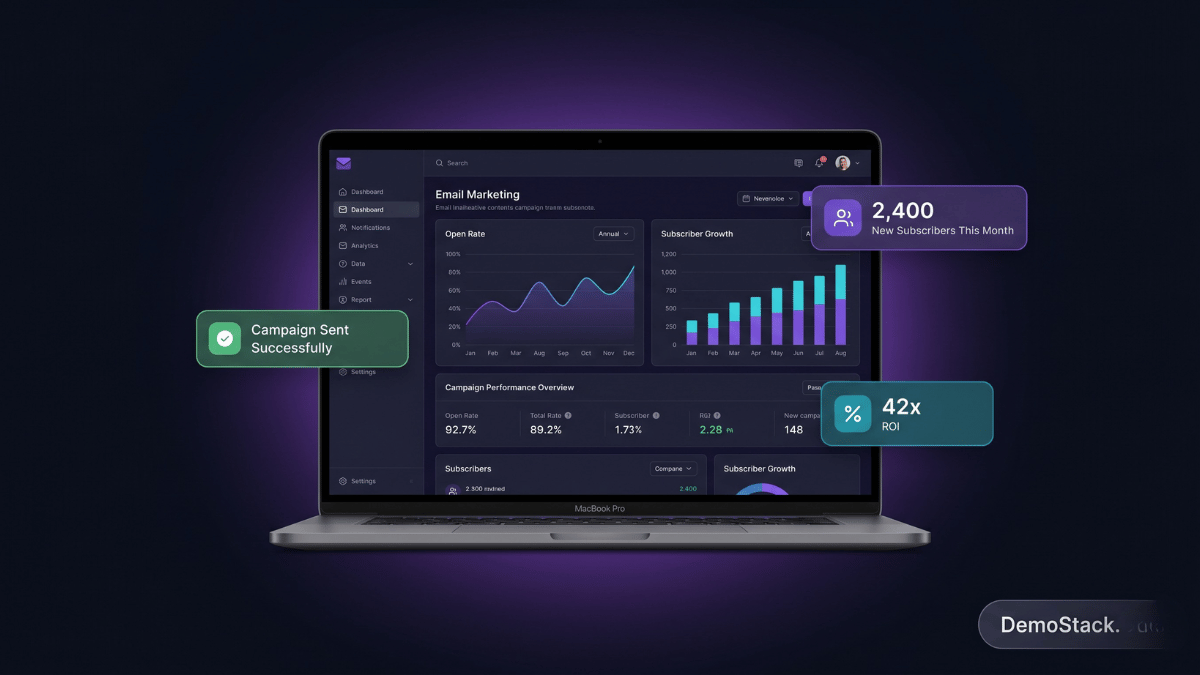
With email usage projected to reach 5 billion users in 2026 and an average ROI of $42 for every $1 spent, email marketing remains the highest-return channel available to small businesses. However, choosing the wrong platform means paying for features you do not need, outgrowing your tool too quickly, or struggling with deliverability that kills your results. We compared the 7 best email marketing tools for small businesses so you can make the right choice from day one.
Brevo ·
MailerLite ·
HubSpot ·
ActiveCampaign ·
Klaviyo ·
ManyChat ·
GetResponse ·
Side-by-Side Table ·
How to Choose
Why the Best Email Marketing Tools for Small Businesses Matter More Than Ever
Finding the best email marketing tools for small businesses has never been more important — or more confusing. In 2026, the leading email marketing platforms have evolved far beyond simple newsletter senders, combining automation, AI-powered personalization, CRM, SMS, and landing page builders into unified platforms that can replace multiple separate tools in your marketing stack. As a result, choosing the right email marketing software has become one of the most impactful decisions a small business can make for their marketing strategy.
However, not all email marketing tools are created equal. Some platforms are packed with features that small businesses will never need, while others are so stripped-back that you outgrow them within your first few months. Furthermore, pricing models vary dramatically: some charge by the number of contacts, others by the number of emails sent, and a few by the features you activate. Understanding these differences is therefore essential before you commit to a platform.
In this roundup of the best email marketing tools for small businesses, we evaluated 7 leading platforms across six criteria: ease of use, email deliverability, automation capabilities, pricing transparency, integration quality, and scalability. Our goal is to give you a clear, honest answer about which email marketing software fits your specific situation, whether you are sending your first newsletter or building advanced multi-step automation sequences.
How We Evaluated These Email Marketing Tools
Each platform was assessed across ease of use, automation depth, email deliverability rates, pricing transparency (including hidden fees and overage charges), integration with third-party tools, free plan generosity, and scalability for growing teams. We also analyzed verified user reviews from G2, Capterra, and Trustpilot to ensure our assessments reflect real-world user experiences.
Best Email Marketing Tools for Small Businesses, at a Glance
Brevo, Best Overall
Best all-in-one email marketing tool for small businesses. Unique contact-based pricing, SMS, CRM, and live chat in one platform. Free plan available.
MailerLite, Best Value
Best affordable email marketing software with a strong free plan. Generous limits, easy drag-and-drop builder, automation, and landing pages from $9/month.
HubSpot, Best for CRM Integration
Best email marketing tool for businesses that also need sales CRM. Free CRM plus email marketing in one unified platform.
ActiveCampaign, Best Automation
Best email marketing platform for advanced automation workflows. AI-powered, top-tier deliverability, best for businesses ready to scale their email programs.
Klaviyo, Best for E-commerce
Best email marketing software for Shopify and WooCommerce stores. Deep product catalog integration, behavioral triggers, and revenue-per-email reporting.
ManyChat, Best for Messenger and Instagram
Best email marketing tool that combines email with social messaging automation. Ideal for businesses that sell through Instagram, Facebook, and WhatsApp.
GetResponse, Best for Webinars
Best email marketing platform for businesses that run webinars and online events. Built-in webinar hosting, landing pages, and email automation in one tool.
1. Brevo, Best Overall Email Marketing Tool for Small Businesses
📧 What Makes Brevo Different from Other Email Marketing Tools
When it comes to the best email marketing tools for small businesses in 2026, Brevo stands out as the most well-rounded choice. Formerly known as Sendinblue, Brevo offers a genuinely unique pricing model: instead of charging by the number of contacts stored, it charges by the number of emails sent per month. As a result, you can store unlimited contacts on all plans, which is a significant advantage for businesses that are building their list but not yet emailing everyone regularly.
🔧 Brevo Features Beyond Email Marketing
Beyond email, Brevo has evolved into a true all-in-one marketing platform. In addition to email campaigns and automation, it includes SMS marketing, WhatsApp marketing, live chat, a built-in CRM, transactional emails, and a landing page builder. For small businesses that want to reduce the number of separate tools in their stack, this breadth of functionality makes Brevo one of the most cost-effective options available. Moreover, the free plan is genuinely usable, offering unlimited contacts, 300 emails per day, and access to the core automation features at no cost.
⚙️ Brevo Automation and Deliverability
Brevo’s automation builder is particularly strong for small business needs. You can build welcome sequences, abandoned cart flows, birthday campaigns, and lead nurture sequences without needing any technical skills. Furthermore, Brevo’s deliverability rates are consistently rated among the best in the category, which means your emails are more likely to reach the inbox rather than the spam folder. For a detailed look at everything Brevo offers, our full Brevo review covers every feature and plan in depth.
✅ Brevo Pros
- Unique send-based pricing, store unlimited contacts
- All-in-one platform: email, SMS, WhatsApp, CRM, live chat
- Free plan with unlimited contacts and 300 emails/day
- Strong automation builder, beginner-friendly
- Excellent deliverability rates
- Transactional email support included
- No overage charges on paid plans
❌ Brevo Cons
- Email templates are more basic than some competitors
- Analytics are limited on lower-tier plans
- Customer support response times can be slow
- Advanced reporting requires a higher plan
Brevo Pricing
Free: Unlimited contacts, 300 emails/day · Starter: From $9/month (20,000 emails) · Business: From $18/month (20,000 emails, full automation) · Enterprise: Custom. Read our full Brevo review
2. MailerLite, Best Value Email Marketing Software for Small Businesses
💰 MailerLite Free Plan, the Most Generous in the Category
MailerLite consistently ranks among the best email marketing tools for small businesses that need maximum value at minimum cost. Its free plan includes 1,000 subscribers and 12,000 emails per month, which is significantly more generous than most competitors. Notably, automation workflows, landing pages, and a website builder are all included on the free plan, features that most platforms reserve exclusively for paid tiers. As a result, MailerLite is ideal for businesses that are just getting started with email marketing and want to build real capability before spending a dollar.
🎨 MailerLite Ease of Use and Editor
User experience is one of MailerLite’s strongest selling points. Its drag-and-drop email editor is clean and intuitive, and the automation builder makes it straightforward to set up welcome sequences, abandoned cart emails, and audience segmentation workflows even without prior email marketing experience. Furthermore, the platform’s pay-as-you-grow pricing model means that costs scale predictably with your list size, rather than jumping suddenly when you cross an arbitrary threshold.
⚠️ What MailerLite Does Not Include
It is worth noting that MailerLite focuses exclusively on email marketing and does not include a built-in CRM, SMS marketing, or live chat. However, for small businesses whose primary need is email, this focused approach is actually a strength. The platform is not bloated with features that distract from its core purpose, and it integrates cleanly with separate tools like Brevo or Tidio for those additional capabilities when needed.
✅ MailerLite Pros
- Most generous free plan: 1,000 subscribers, 12,000 emails/month
- Automation, landing pages, and website builder on free plan
- Cleanest, most beginner-friendly email editor in category
- Pay-as-you-grow pricing, no sudden price jumps
- Excellent template library
- Strong deliverability rates
- From $9/month for paid plans
❌ MailerLite Cons
- No built-in CRM or SMS marketing
- Advanced automation limited compared to ActiveCampaign
- 24/7 support only on paid plans
- Fewer integrations than larger platforms
MailerLite Pricing
Free: 1,000 subscribers, 12,000 emails/month · Growing Business: From $9/month (unlimited emails, 3 users) · Advanced: From $18/month (unlimited users, advanced automation). Prices scale with subscriber count.
3. HubSpot, Best Email Marketing Tool for Businesses That Also Need CRM
🔗 HubSpot as a Unified Sales and Email Platform
HubSpot occupies a unique position among the best email marketing tools for small businesses because it is not purely an email platform. Instead, it is a comprehensive marketing, sales, and CRM platform where email marketing is one component of a much larger system. Consequently, HubSpot is the strongest choice for small businesses that want their email marketing and their sales pipeline to work from the same unified data set, without needing to integrate separate tools.
🆓 What HubSpot’s Free Plan Includes
HubSpot’s free plan is genuinely impressive in scope. You get a full CRM, email marketing up to 2,000 sends per month, forms, landing pages, live chat, and a reporting dashboard, all at no cost. For businesses running sales and marketing simultaneously, this free tier provides more integrated functionality than any other platform in this roundup. Furthermore, HubSpot’s personalization and segmentation capabilities are among the deepest available, enabling highly targeted campaigns based on CRM data including deal stage, company size, job title, and behavioral triggers.
💸 HubSpot Pricing Considerations at Scale
The main trade-off with HubSpot as an email marketing tool for small businesses is pricing at the paid tier. While the free plan is excellent, paid Marketing Hub plans jump to $20 per month and scale significantly with contact count and feature access. For businesses with large lists that need advanced automation, HubSpot can become expensive relative to dedicated email marketing tools like MailerLite or Brevo. Nevertheless, for businesses where the CRM-to-email connection is the primary value, HubSpot delivers an integration quality that separate tools cannot easily replicate.
✅ HubSpot Pros
- Free CRM plus email marketing in one unified platform
- Deep personalization and segmentation from CRM data
- Excellent free plan with 2,000 emails/month
- Best-in-class support and knowledge base
- Strong landing page and form builder
- Integrates with virtually every business tool
- AI-powered email content suggestions
❌ HubSpot Cons
- Paid plans become expensive at scale
- Free plan branding on all emails
- Free plan cannot authenticate sending domain (SPF/DKIM)
- 2,000 emails/month limit on free plan is low for active senders
- Platform can feel complex for pure email marketing needs
HubSpot Pricing
Free: 2,000 emails/month, full CRM · Starter: From $20/month · Professional: From $890/month · Enterprise: From $3,600/month. Pricing scales significantly with contacts and features.
4. ActiveCampaign, Best Email Marketing Platform for Advanced Automation
🤖 ActiveCampaign Automation Capabilities
Among all the best email marketing tools for small businesses in 2026, ActiveCampaign is the platform most frequently recommended by professional marketers and agencies. Its automation capabilities are deeper and more flexible than any other tool in this roundup. Specifically, the visual workflow builder lets you create multi-branch automation sequences that respond dynamically to subscriber behavior, making it possible to deliver genuinely personalized email experiences at scale.
💡 Active Intelligence: AI That Improves Over Time
In 2026, ActiveCampaign introduced Active Intelligence, an AI system that builds a persistent model of your brand voice, engagement patterns, and campaign performance over time. In contrast to AI features on other platforms, which are essentially one-time content generators, Active Intelligence gets genuinely smarter the longer you use it. Consequently, open rates, click rates, and conversion rates tend to improve steadily for businesses that commit to the platform over 6 to 12 months. Furthermore, ActiveCampaign consistently achieves top-tier email deliverability rates, which is critical because even the best-written email is worthless if it lands in spam.
💸 ActiveCampaign Pricing Reality Check
The main consideration with ActiveCampaign as an email marketing tool for small businesses is cost. Unlike most competitors, there is no free plan. Pricing starts at $15 per month for up to 1,000 contacts on the Starter plan, and costs climb significantly for larger lists or advanced automation needs. However, for businesses that are serious about email marketing as a revenue-driving channel and are ready to build sophisticated automation programs, ActiveCampaign delivers returns that typically justify its premium positioning.
✅ ActiveCampaign Pros
- Most powerful automation builder in the category
- Active Intelligence AI gets smarter over time
- Top-tier email deliverability, consistently rated best in class
- Built-in CRM with sales automation
- 1,000+ integrations with third-party tools
- Predictive sending and content optimization
- Strong reporting and analytics
❌ ActiveCampaign Cons
- No free plan, starts at $15/month
- Steeper learning curve than MailerLite or Brevo
- Can be overkill for very simple email needs
- Pricing increases significantly with list size
- Interface can feel dated compared to newer platforms
ActiveCampaign Pricing
Starter: From $15/month (1,000 contacts) · Plus: From $49/month · Professional: From $79/month. No free plan. 14-day free trial available. All prices scale with contact count.
5. Klaviyo, Best Email Marketing Tool for E-commerce Businesses
🛍️ Why Klaviyo Is Built for E-commerce
If your small business sells products online, Klaviyo is almost certainly the best email marketing tool for your specific situation. Unlike generic email marketing platforms that treat e-commerce as one use case among many, Klaviyo was built from the ground up specifically for online retail. As a result, it integrates natively with Shopify, WooCommerce, Magento, and BigCommerce, pulling in product catalog data, purchase history, browsing behavior, and inventory levels in real time.
📊 Klaviyo’s Revenue-Driving Email Flows
This deep product and behavioral data integration enables email marketing capabilities that generic platforms simply cannot match. For example, Klaviyo can automatically send an email when a specific product goes back in stock, trigger a personalized product recommendation based on what a customer browsed but did not purchase, or send a win-back campaign precisely timed to when a customer’s average repurchase window expires. Each of these workflows drives measurable revenue in ways that go well beyond standard newsletter campaigns.
💰 Klaviyo Pricing and ROI
Klaviyo offers a free plan up to 250 contacts, after which costs scale with list size. For active e-commerce stores, the platform typically more than pays for itself in recovered abandoned carts and repeat purchase revenue alone. Furthermore, Klaviyo’s reporting includes revenue-per-email metrics that make it straightforward to calculate the direct financial return of every campaign and automation you run, giving you clear visibility into exactly what your email marketing investment is generating.
✅ Klaviyo Pros
- Best-in-class e-commerce integrations (Shopify, WooCommerce)
- Real-time product catalog and purchase data in emails
- Revenue-per-email reporting proves direct ROI
- Advanced behavioral segmentation
- Pre-built e-commerce flows (abandoned cart, win-back, VIP)
- SMS marketing included alongside email
- Clean, intuitive visual flow builder
❌ Klaviyo Cons
- Expensive relative to general-purpose email tools
- Free plan limited to 250 contacts
- Overkill for service-based businesses without product catalogs
- Some users find mobile editing unintuitive
- Costs can climb quickly for large product catalogs
Klaviyo Pricing
Free: 250 contacts, 500 emails/month · Email: From $20/month (500 contacts) · Email + SMS: From $35/month. Pricing scales with contact count. No overage charges on paid plans.
6. ManyChat, Best Email Marketing Tool Combined with Social Messaging
💬 ManyChat’s Unique Position Among Email Marketing Tools
ManyChat occupies a genuinely unique position in the email marketing tools landscape. While it is primarily known as a chatbot and messaging automation platform for Instagram, Facebook Messenger, and WhatsApp, it also includes email marketing capabilities that make it a compelling choice for small businesses generating most of their leads through social media channels.
📱 How ManyChat Captures Email Subscribers from Social Media
The core strength of ManyChat as part of your email marketing strategy is its ability to capture email subscribers through social media interactions. For example, a business can set up a flow where anyone who comments on a specific Instagram post automatically receives a DM, and if they respond, their email address is captured and added to an email sequence. This social-to-email capture approach is particularly effective for content creators, e-commerce brands, coaches, and service businesses that have engaged social audiences but struggle to convert followers into subscribers.
🔍 Is ManyChat the Right Email Marketing Tool for You?
In terms of standalone email marketing features, ManyChat is less comprehensive than dedicated tools like Brevo or MailerLite. However, for businesses where social media is the primary acquisition channel, the combination of social messaging automation and email follow-up in one platform creates a genuinely powerful conversion funnel. For a complete overview of ManyChat’s capabilities, our full ManyChat review covers every feature and use case in detail.
✅ ManyChat Pros
- Best platform for social-to-email lead capture
- Instagram, Facebook Messenger, and WhatsApp automation
- Visual flow builder, easy to set up without code
- Free plan available with basic features
- Strong e-commerce integrations (Shopify, WooCommerce)
- SMS marketing included
- Excellent for comment-to-DM Instagram automation
❌ ManyChat Cons
- Email marketing features less comprehensive than dedicated tools
- Best value only if social media is your primary channel
- Reporting and analytics are basic compared to ActiveCampaign
- Dependent on Meta platform policies for Instagram and Facebook
ManyChat Pricing
Free: Up to 1,000 contacts, basic flows · Pro: From $15/month (unlimited contacts, full automation). Read our full ManyChat review
7. GetResponse, Best Email Marketing Platform for Businesses Running Webinars
🎥 GetResponse: The Only Email Tool with Built-In Webinar Hosting
GetResponse is the only email marketing tool for small businesses in this roundup that includes built-in webinar hosting as part of the platform. Consequently, it is the natural choice for businesses that run webinars, online courses, or live digital events as part of their marketing strategy. Rather than paying separately for a webinar platform and an email marketing tool, GetResponse combines both in one subscription, along with landing pages, automation, and a website builder.
📧 GetResponse Email Marketing Features
In terms of its email marketing capabilities specifically, GetResponse is a solid performer. Its drag-and-drop editor produces professional results, automation workflows handle standard sequences like welcome series and drip campaigns competently, and the segmentation tools allow targeting based on behavioral data, purchase history, and engagement levels. Furthermore, the platform includes a calendar view for email sequences that makes it easy to visualize when subscribers will receive each message in a drip campaign, a feature that is surprisingly rare across most email marketing software.
⚠️ Hidden Fees: What to Watch Out For
It is worth noting that GetResponse has been identified as one of the platforms that charges hidden overage fees when you exceed your contact or send limits. Therefore, if you are considering GetResponse as your email marketing tool, review the pricing terms carefully before signing up to understand exactly what triggers additional charges. That said, for businesses where webinar integration is a genuine priority, no other email marketing platform in this category comes close to what GetResponse offers at a comparable price point.
✅ GetResponse Pros
- Only email marketing tool with built-in webinar hosting
- Strong automation and drip campaign builder
- Calendar view for visualizing email sequences
- Landing page and website builder included
- E-commerce integrations available
- Free plan available (up to 500 contacts)
- Good template library with professional designs
❌ GetResponse Cons
- Hidden overage charges reported by users
- Webinar feature only on higher-tier plans
- Less competitive on pure email features vs Brevo or MailerLite
- Interface feels older than modern alternatives
- Support quality inconsistent at lower tiers
GetResponse Pricing
Free: 500 contacts, 2,500 emails/month · Email Marketing: From $15/month · Marketing Automation: From $49/month · Ecommerce Marketing: From $99/month. Webinar features available from the Marketing Automation plan.
Best Email Marketing Tools for Small Businesses, Side-by-Side
Here is a complete comparison of all 7 email marketing tools for small businesses to help you evaluate them at a glance:
| Platform | Free Plan | Starting Price | Automation | CRM | SMS | Best For |
|---|---|---|---|---|---|---|
| Brevo | 300 emails/day, unlimited contacts | $9/mo | ✓ Strong | ✓ | ✓ | Best overall for SMBs |
| MailerLite | 1,000 subscribers, 12,000 emails/mo | $9/mo | ✓ Good | ✗ | ✗ | Best value, beginners |
| HubSpot | 2,000 emails/mo, full CRM | $20/mo | ✓ Strong | ✓ | ✗ | CRM + email together |
| ActiveCampaign | 14-day trial only | $15/mo | ✓ Best in class | ✓ | ✓ | Advanced automation |
| Klaviyo | 250 contacts, 500 emails/mo | $20/mo | ✓ Strong | Basic | ✓ | E-commerce stores |
| ManyChat | 1,000 contacts, basic flows | $15/mo | ✓ Good | ✗ | ✓ | Social media businesses |
| GetResponse | 500 contacts, 2,500 emails/mo | $15/mo | ✓ Good | Basic | ✗ | Webinar-based businesses |
How to Choose the Best Email Marketing Tool for Your Small Business
Selecting the right email marketing tool for your small business comes down to matching the platform’s strengths to your specific situation. Rather than choosing based on brand recognition alone, use the following decision framework to identify the best fit for where your business is today.
🔑 Match Your Email Marketing Tool to Your Business Type
If budget is your primary constraint
Start with MailerLite. Its free plan is the most generous in the category (1,000 subscribers, 12,000 emails/month, automation included), and the paid plans start at just $9/month. Alternatively, Brevo’s free plan covers unlimited contacts with 300 daily sends, which is ideal if you have a large list but send infrequently. Both are strong choices as email marketing tools for small businesses on a tight budget.
If you run an online store
Klaviyo is the clear winner here. No other email marketing platform comes close to its native e-commerce integrations, behavioral segmentation, and revenue attribution capabilities. The abandoned cart recovery, back-in-stock alerts, and lifetime value segmentation features alone typically pay for the subscription many times over. For businesses using Spocket or other dropshipping suppliers, Klaviyo connects directly to your Shopify store for seamless product data sync.
If you also need a sales CRM
HubSpot is the right choice. The combination of free CRM and email marketing in one unified platform is unmatched for businesses that want their sales and marketing data to live in the same system. Alternatively, for businesses that need deeper sales automation alongside email, Reply.io covers outbound email sequences integrated with a full sales engagement workflow.
If you want the most powerful automation
ActiveCampaign is your best option. If email marketing is a strategic revenue driver for your business and you are ready to invest in building sophisticated, AI-powered automation sequences, ActiveCampaign delivers capabilities that no other tool in this roundup can match. The learning curve is steeper than simpler platforms, but for businesses serious about email, the results justify the investment.
📱 Social Media and Event-Based Businesses
If most of your audience is on social media
ManyChat is the strongest fit. If your business generates leads and sales primarily through Instagram, Facebook, or WhatsApp, ManyChat’s social-to-email capture flows are the most effective way to convert social followers into email subscribers. The combination of chatbot automation and email follow-up sequences creates a conversion funnel that purely email-focused tools cannot replicate. Read our ManyChat review to see exactly how these flows work.
If you run webinars or online events
GetResponse is purpose-built for this use case. It is the only email marketing tool for small businesses in this roundup with built-in webinar hosting. Consequently, combining email automation with webinar registration, reminder sequences, and post-event follow-ups in one platform simplifies the workflow significantly compared to managing a separate webinar tool alongside your email platform.
5 Things to Check Before Choosing an Email Marketing Tool
Before committing to any email marketing software for your small business, verify these five things to avoid unpleasant surprises after you have already migrated your list and built your workflows. In particular, paying attention to these criteria upfront can save you significant time and cost later:
💡 Pricing and Technical Checks
1. Check for Hidden Overage Fees
Some email marketing tools charge overage fees when you exceed your contact or send limit, sometimes without warning. According to user research, platforms including Constant Contact, GetResponse, MailJet, SendGrid, and Benchmark have reported overage charges. Therefore, always read the pricing terms specifically for what happens when you exceed your plan limits before signing up.
2. Verify Deliverability Rates
Email deliverability, meaning the percentage of emails that reach the inbox rather than spam, varies significantly between platforms. A platform with 99% deliverability versus 85% deliverability represents a huge difference in real-world results. Consequently, check independent deliverability tests from sources like EmailToolTester before choosing your email marketing tool.
3. Test Your Most Critical Integration
Before committing, connect the integration your business relies on most, such as Shopify, your CRM, or your website form tool, and verify it works correctly. A broken or unreliable integration between your email marketing software and your other tools creates data gaps that undermine your entire email strategy.
📊 Data and Reporting Checks
4. Confirm Data Export Is Easy
Before signing up for any email marketing platform, verify that you can export your full subscriber list, including all tags and custom fields, at any time without paying extra or waiting for support. Some platforms make data export deliberately difficult to create switching friction. Your subscriber list is your most valuable marketing asset, so always confirm you own it fully.
5. Evaluate Reporting Before You Commit
Many email marketing tools offer impressive dashboards in demos that turn out to be locked behind higher-tier plans in practice. During your trial, specifically try to access open rate reports, click heatmaps, revenue attribution data, and unsubscribe analysis. If the reports you need are not available on your chosen plan, factor the upgrade cost into your total pricing comparison.
🏆 Best Email Marketing Tools for Small Businesses, Our Final Verdict
For the majority of small businesses, Brevo is the best email marketing tool in 2026. Its unique send-based pricing model, unlimited contact storage, all-in-one channel coverage (email, SMS, WhatsApp, CRM), and generous free plan make it the most complete and cost-effective choice for businesses growing their marketing capabilities without wanting to manage multiple separate tools.
For businesses on the tightest budget, MailerLite’s free plan is the most generous in the category and its paid plans are the most affordable. For e-commerce stores, Klaviyo’s product-native integrations and revenue attribution make it the clear category winner. For businesses that need their email marketing to work directly alongside a sales CRM, HubSpot is the unified platform that eliminates the data silos that plague separate-tool approaches.
Whichever platform you choose from this list of best email marketing tools for small businesses, the most important step is to start, build your list consistently, and let your audience data guide your automation strategy over time.